Chimney Services in Hamilton Township (Mercer County), NJ
Most of Hamilton Township's housing was built between 1940 and 1979, which puts many of its brick chimneys somewhere between 45 and 85 years old. The section above the roof takes the hardest weather, and it is the focus of this page.
On this page
Chimney profile: Hamilton Township (Mercer County)
Census estimates for 37,628 housing units (36,705 occupied).
When homes were built
- Before 1940 14%
- 1940–59 29%
- 1960–79 32%
- 1980–99 16%
- 2000 or later 10%
How occupied homes are heated
- Utility gas 74%
- Fuel oil 6%
- Electricity 18%
- Propane 2%
- Wood 0%
Type of housing
- Single-family, detached 63%
- Single-family, attached 10%
- 2–4 units 9%
- 5+ units 17%
Source: U.S. Census Bureau, American Community Survey 2020–2024 5-year estimates, tables B25034, B25040 and B25024, via Census Reporter. Estimates have margins of error; small categories are approximate.
What the numbers suggest for chimneys in Hamilton Township
Census estimates put 29% of Hamilton Township's 37,628 housing units in 1940 to 1959 and 32% in 1960 to 1979, with 14% from before 1940. Only about a quarter were built in 1980 or later. Chimneys from those earlier decades are typically masonry, often with clay tile flues, so the condition of the brick and the condition of the flue both come into play; The parts of a chimney, top to bottom lays out how they relate.
About 74% of occupied homes heat with utility gas, 18% with electricity and 6% with fuel oil. Where a household has switched to electric heat or to a furnace that vents through the wall, the chimney can be left with nothing attached and still face every winter. An idle chimney still needs its top kept closed to water, a point the Academy covers in its page on fireplaces nobody uses.
Detached homes make up 63% of units, with 10% attached, 9% in two- to four-unit buildings and 17% in larger buildings. Attached homes sometimes share one chimney structure, so work on one side can involve the neighbor. These numbers are township-wide and say nothing certain about any single chimney.
Why the top of the chimney wears first
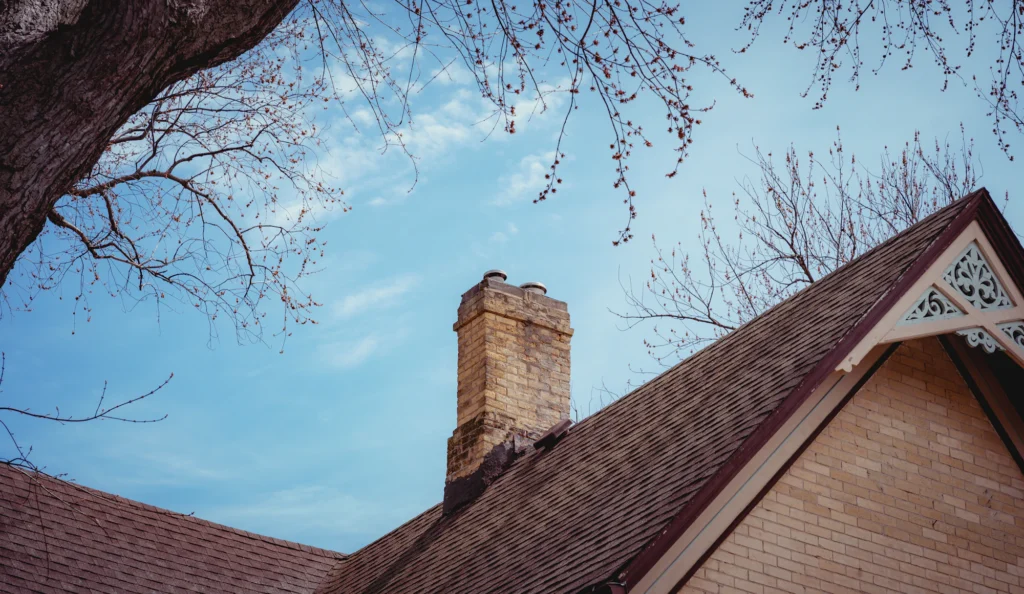
Above the roof line, a chimney stands in rain, wind, sun and frost on all four faces, with no heated house wrapped around it. The Brick Industry Association's maintenance note singles out chimneys, along with parapets and copings, as parts of a building that face more severe exposure and may need repair sooner. The parts involved, from the top down:
- Crown. The concrete or mortar slab on top of the brick. Once it cracks, water reaches the masonry below; see crown coating vs. crown rebuild.
- Mortar joints. Joints in the top courses erode and open, letting more water in.
- Brick. Saturated brick can crack and spall as it freezes and thaws.
- Structure. Eventually courses loosen, the top section leans or separates, or the flue tile above the crown shifts.
Repair, partial rebuild or full rebuild
The choice turns on how much sound masonry is left and whether the structure has moved.
- Repair fits when the brick is sound and the damage is limited to the crown, some joints or a handful of bricks: crown repair, repointing or replacing individual units. In BIA's definition, repointing means raking out the damaged mortar to an even depth and filling the joint with new mortar.
- Partial rebuild fits when the top courses are loose, widely spalled or out of line but the chimney below the roof is sound. The damaged section is taken down to solid masonry and relaid with a new crown.
- Full rebuild comes up when cracking, movement or lean runs through most of the chimney. See chimney rebuilding and restoration.
A rebuild is also the moment to deal with what caused the damage: a properly built crown, a cap, new flashing at the roof line, and a new liner if the old flue tile is damaged. After a storm, CSIA calls for a Level 2 inspection following an external event likely to have damaged the chimney, and it names weather events among them. Our repair or rebuild guide goes deeper.
Local questions
How can I tell if my chimney top needs rebuilding?
From the ground you may notice loose or missing bricks, a visible lean, or wide open joints near the top. Those are clues; an inspection on the roof, with photos, is what shows whether repair or rebuilding fits.
Can just the part above the roof be rebuilt?
Often, yes. When the damage is limited to the exposed section and the masonry below is sound, the chimney can be taken down to solid brick and relaid from there.
Does rebuilding the top change the flue?
It can. If the flue tile in the rebuilt section is damaged, or the flue now serves a different appliance, the flue work is planned along with the masonry, sometimes with a new liner.
We share a chimney with the house next door. What then?
Work on a shared chimney affects both homes, so both owners should agree on the scope before it is scheduled.
Sources
- U.S. Census Bureau, American Community Survey 2020–2024 5-year estimates (tables B25034, B25040, B25024), via Census Reporter
- Brick Industry Association, Technical Note 46: Maintenance of Brick Masonry (PDF)
- Brick Industry Association, Technical Note 7: Water Penetration Resistance, Design and Detailing (PDF)
- CSIA: The Three Levels of Chimney Inspections
Related
Chimney Rebuilding and Restoration
Sometimes the damage goes deeper than mortar joints and a few bricks. A rebuild takes down the failing section and lays…
ServiceChimney Crown Repair
The crown is the masonry slab across the top of the chimney. When it cracks or was built too flat, water goes straight…
ServiceChimney Masonry Repair and Repointing
Brick and mortar above the roofline take more weather than any other masonry on the house. When joints erode and brick…
GuideRepair or Rebuild a Chimney?
Repair is usually the right call when the damage is limited to the surface, a few bricks, or worn mortar joints, and…
GuideCrown Coating vs. Crown Rebuild
A crown coating is a reasonable choice when the crown is structurally solid and the damage is limited to hairline…