Chimney Services in Warren Township, NJ
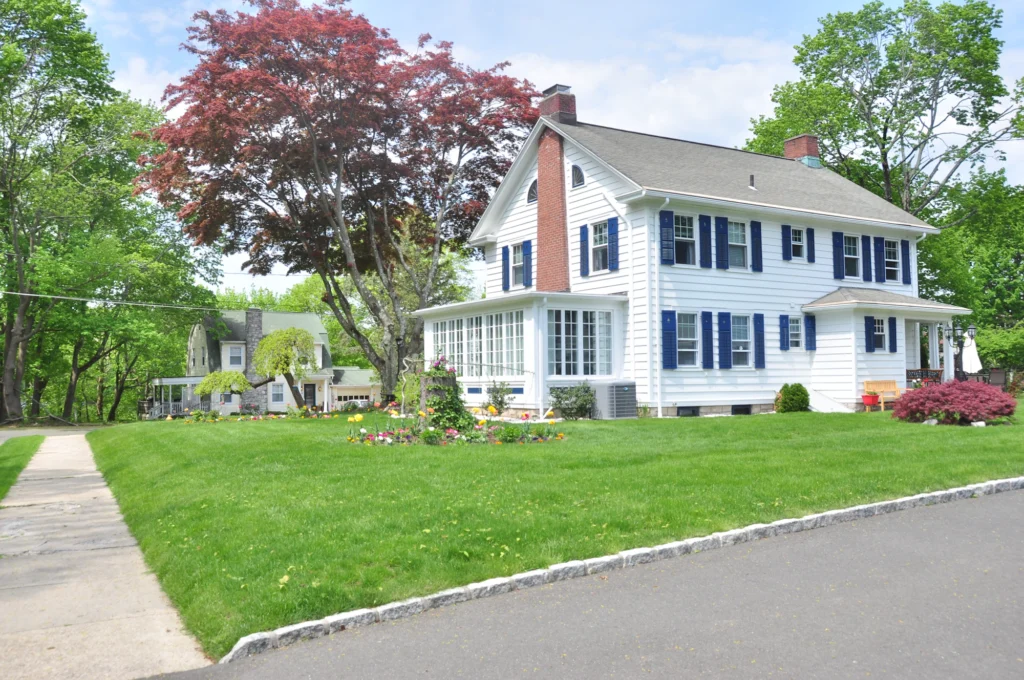
Nearly nine in ten Warren Township homes are detached houses, many with chimneys that rise through a sloped roof. Where a wide chimney meets the roof, the uphill side takes the runoff, and a small ridge called a cricket decides where that water goes.
On this page
Chimney profile: Warren Township
Census estimates for 5,560 housing units (5,376 occupied).
When homes were built
- Before 1940 4%
- 1940–59 14%
- 1960–79 22%
- 1980–99 37%
- 2000 or later 22%
How occupied homes are heated
- Utility gas 84%
- Fuel oil 4%
- Electricity 10%
- Propane 1%
- Wood 0%
- Other or none 1%
Type of housing
- Single-family, detached 87%
- Single-family, attached 2%
- 2–4 units 1%
- 5+ units 8%
Source: U.S. Census Bureau, American Community Survey 2020–2024 5-year estimates, tables B25034, B25040 and B25024, via Census Reporter. Estimates have margins of error; small categories are approximate.
What the numbers suggest for chimneys in Warren Township
Census estimates show about 87% of Warren Township's 5,560 housing units are detached single-family homes, with 8% in buildings of five or more units and very few attached homes. Construction is spread out: about 14% from 1940 to 1959, 22% from the 1960s and 1970s, 37% from 1980 to 1999 and 22% since 2000. That span covers brick chimneys on older houses and framed chases around factory-built fireplaces on newer ones. Both kinds pass through a roof and need sound flashing.
About 84% of occupied homes heat with utility gas and 10% with electricity; fuel oil is about 4% and propane about 1%. The estimate for wood as a main heating fuel rounds to zero; that figure reflects main heating only and says nothing about how often fireplaces are lit.
These are township-wide figures. They outline the housing stock without describing the condition of any chimney.
Why the uphill side of a chimney leaks first
Rain and snowmelt run down the roof until they hit the chimney. On the downhill and side faces, water can keep moving past the flashing. On the uphill face it meets a wall. A ProBuilder article on crickets calls water backing up behind a chimney one of the most common causes of roof leaks, describing runoff that settles against the uphill side, works into the flashing and eventually reaches the attic or living space.
Roofers build a cricket (or saddle) on that uphill face: a miniature gable that parts the stream of water and sends it around both sides of the chimney. GAF describes the usual build as a wood frame covered with metal (aluminum, galvanized steel or copper) or with shingles over flashing. Both ProBuilder and GAF cite the International Residential Code's roofing section, R903.2.2, which calls for a cricket on the ridge side of any chimney or penetration more than 30 inches wide, measured perpendicular to the slope. Your township construction office applies the code edition New Jersey has adopted.
You can usually judge the width from the ground or from a roofer's photos. Do not climb onto the roof to measure it.
How the cricket and the flashing work together
A cricket only helps if its edges are sealed to the chimney. ProBuilder states that flashing is where most crickets fail, and that counterflashing should lap the upturned cricket membrane and be set into a mortar joint or a cut reglet. The same layered logic applies all around the chimney.
The Mason Contractors Association of America's brief on flashing chimneys describes base flashing extending at least four inches onto the roof and four inches up the chimney face, with counterflashing lapped over it by at least three inches. When an inspection finds staining or rot on the uphill side, the questions are whether a cricket is present, whether it is big enough for the chimney, and whether its flashing and the counterflashing above it are intact. Our guide to chimney flashing shows the layers, and flashing repair covers the work.
Local questions
How do I know if my chimney has a cricket?
From the yard or an upstairs window, look at the side of the chimney facing the roof ridge. A cricket appears as a small peaked roof between the chimney and the slope above it. Photos from a roofer or an inspection will show it clearly.
My chimney is narrower than 30 inches. Can water still collect behind it?
Yes. The 30-inch figure only marks where the model code requires a cricket. Narrower chimneys can still hold water against their uphill face, so their flashing has to be sound.
When is the best time to add a cricket?
A roof replacement is the natural moment, since the roofing around the chimney is already off. Our guide on planning chimney work around a new roof covers the timing.
The ceiling near the chimney stains only during storms with strong wind. Is it the cricket?
It may be, or it may be wind-driven rain entering higher up. A controlled water test, done one area at a time, is how the source gets narrowed down.
Sources
- U.S. Census Bureau, American Community Survey 2020–2024 5-year estimates (tables B25034, B25040, B25024), via Census Reporter
- ProBuilder: The Ins, Outs and Arounds of Proper Crickets and Saddles
- GAF: How Chimney Crickets Support a Healthy Roof
- Mason Contractors Association of America: Brick Brief, Flashing Chimneys
Related
Chimney Flashing Repair
Flashing is the metal seal where the chimney passes through the roof. It's two layers working together, and when either…
ServiceChimney Leak Repair
A leaking chimney is rarely fixed by a tube of sealant. We trace where the water is getting in, show you photos of what…
GuideChimney Flashing Explained
Chimney flashing is a layered metal system. Base and step flashing are woven into the roofing, counterflashing is…
GuideReplacing Your Roof? Plan the Chimney Too
Have the chimney inspected before the roof replacement starts, so masonry, crown, and cap repairs can be done first and…
GuideWind-Driven Rain and Chimney Leaks
In calm rain, water mostly runs down a chimney's surfaces. In a windy storm, rain is driven against the face toward the…